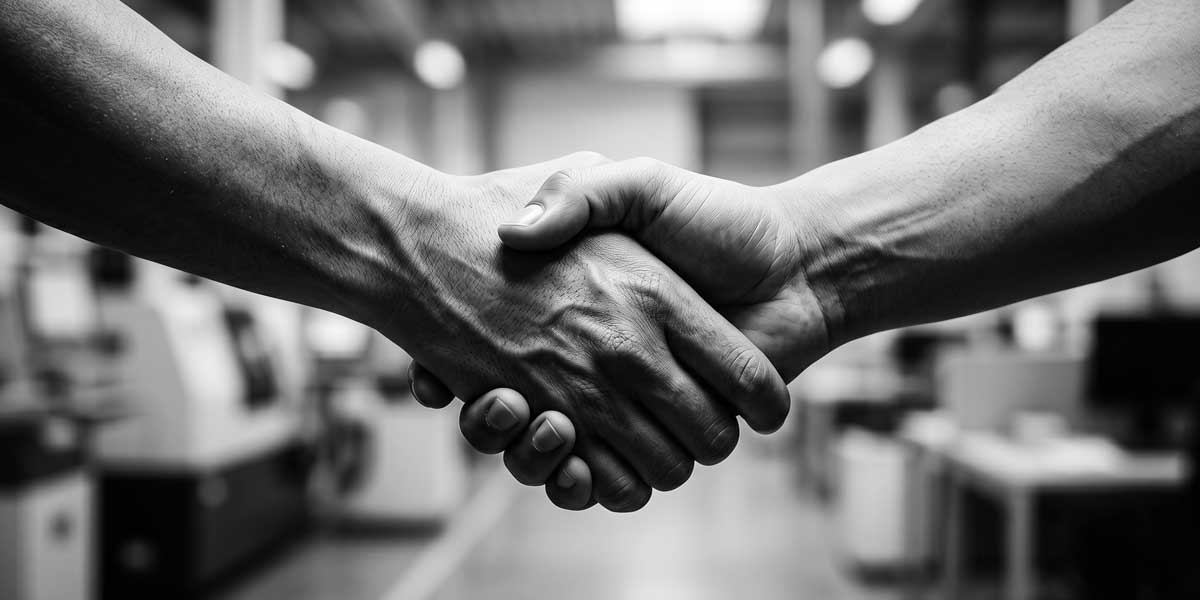
The Handshake Is Back. Was It Ever Really Gone?
In 2020, Anthony Fauci told America to stop shaking hands. One infectious disease expert called the gesture a "bioweapon." The New Yorker wrote its obituary. Corporate America pocketed its palms. For a moment, it seemed like COVID had finally accomplished what 130 years of germ theorists could not: kill the handshake.
That moment lasted about 18 months.
"The handshake is the vampire that didn't die," psychologist Ken Carter of Emory University told The Atlantic. By 2022, corporate grips were back. By 2024, nobody was elbow-bumping at job interviews. Today, on National Handshake Day 2026, the handshake isn't just surviving. It's the default again.
Why It Bounced Back
Because it always does. Yellow fever hit Philadelphia in the late 18th century and people recoiled from extended hands. Cholera fears in the 1890s prompted a Russian anti-handshake society, complete with three-ruble fines for violations. The 1918 flu pandemic led Prescott, Arizona to ban the practice outright. Each time, the handshake came back.
Anthropologist Ella Al-Shamahi, author of The Handshake: A Gripping History, traces the gesture back millions of years. Chimpanzees use similar behaviors after conflicts. The ancient Greeks may have adopted it to prove an empty weapon hand. Thomas Jefferson pushed it as a democratic alternative to the bowing and scraping of British court culture.
No fist bump, head nod, elbow tap, or shoe-touch replicates what a handshake does: mutual, consensual, just enough physical contact to signal trust without the intimacy of a hug. The Guardian noted in 2022 that even the pandemic-endorsed fist bump, for all its hygiene benefits, never quite captured the same social weight.
The Introvert's Guide to Not Blowing It
The Introvert's Survival Guide to the Handshake
You still have to do it. Click through the six steps below.
The Verdict
The handshake is back. It never really left. The pandemic gave us permission to question it, and that is not entirely bad: etiquette experts note people are more considerate now about reading whether someone wants to shake or not. But the baseline remains. Walk into a job interview, a plant floor introduction, or a client meeting and you extend your hand.
As The Atlantic observed just last month, the handshake has outlasted curtsies, bows, elbow bumps, and shoe taps. It has survived every epidemic thrown at it since the 1700s.
Happy National Handshake Day.
How to Read People by Their Bad Handshake
A handshake is a data transfer. Grip strength, palm contact, duration, release — every variable tells you something about the person on the other end. Vote for the grip you think is the worst offense below, then read what it actually signals about the person giving it.
What Is the Worst Handshake Grip?
Select a grip style above.